Source Twin Tube Auto Suspension Shocks for Cars, Trucks, SUVs
Compare 30 listings for twin tube auto suspension shocks suitable for various vehicle types. Buyers can evaluate specifications, prices, and supplier details to find the right components for their automotive needs; compare the available evidence and request quotations based on your requirements.
Key considerations
Products List
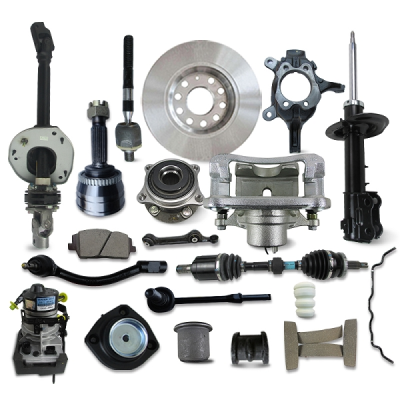


$0.09 - $0.10
Moq: 10000


Comprehensive Sourcing Guide
Twin Tube Auto Suspension Shocks Sourcing Guide
Procurement professionals must first distinguish between standard twin-tube shock absorbers and specialized air suspension units when evaluating listings for Korean and global vehicle platforms. The available data indicates a mix of products, including steel and aluminum suspension control arms alongside air suspension systems with specific installation heights ranging from 365mm to 440mm. Buyers should verify whether the listed item is a hydraulic damper or an air spring component, as the functional requirements for a rear suspension system differ significantly from those for a trailer or industrial application.
The observed product attributes reveal a diverse inventory spanning multiple vehicle makes, including Hyundai, Kia, Volvo, and Volkswagen, alongside specific OE numbers like 51750-3J000. This variety suggests that a single supplier may offer a broad catalog rather than a specialized line, requiring careful cross-referencing of part numbers against the target vehicle model. Sourcing teams must confirm that the "Twin Tube" designation aligns with the specific OE number provided, ensuring the component matches the original equipment geometry and load capacity for the intended application.
Product Scope and Observed Listing Signals
Buyers should scrutinize the material composition listed in product descriptions, as the data shows variations between steel, aluminum, rubber, and stainless steel constructions. While some entries specify a composite of steel, aluminum, and rubber for suspension control arms, others list pure steel or stainless steel for different components. This inconsistency necessitates a clear definition of the required material grade to ensure durability and corrosion resistance, particularly for rear suspension parts exposed to road debris and varying environmental conditions.
The observed listing signals also include conflicting product names, such as "Suspension Control" and "American German Air Suspension," which may indicate a supplier aggregating disparate inventory types. Procurement teams must verify the specific application, noting that some items are designated for trailers while others are for auto suspension systems. Clarifying whether the unit is a coil spring, a compression load type, or a liquid-state component is essential before proceeding with any order to avoid receiving incompatible parts for the vehicle platform.
Technical Specifications to Verify
Technical verification must begin with the precise OE numbers and compatibility lists provided in the product attributes, such as the extensive series of 54500 codes. Buyers should cross-reference these numbers against the specific model year and trim of the vehicle to ensure a direct fit, as the data indicates suitability for Hyundai and Kia models but also lists broader applications like BMW and Benz. Relying solely on the "Car Make" field without checking the specific OE number can lead to installation failures or premature suspension wear.
Dimensional specifications are equally critical, with observed data citing installation heights of 365mm, 390mm, 415mm, and 440mm for air suspension units. Procurement teams must measure the existing suspension geometry on the target vehicle to match these exact heights, as even minor deviations can affect ride height and handling dynamics. Additionally, the single package size of 60x40x30 cm and gross weight of 10 kg should be used to calculate accurate shipping costs and verify that the packaging is sufficient to protect the delicate internal mechanisms during transit.
Compliance and Safety Documentation
Compliance verification requires confirming the presence of valid ISO certifications, as the data explicitly mentions "ISOMaterial:Stainless Steel" alongside other entries. Buyers should request current certification documents to ensure the manufacturing process meets international quality standards, particularly for components that bear significant dynamic loads. The absence of a specific standard number in some listings means the buyer must ask for the exact ISO standard code to validate the quality management system of the supplier.
Safety documentation must also address the functional claims of the product, such as the "Pressed" function and "Cold Roll" production process. While the data lists these attributes, it does not provide specific test results or performance metrics for fatigue life or pressure tolerance. Procurement teams should demand third-party test reports that validate the compression load type and the structural integrity of the steel or aluminum components under real-world driving conditions to ensure passenger safety.
Cost Drivers and Commercial Terms
Cost analysis must account for the wide range of observed prices, which span from $0.01 to $668, reflecting the diversity of components from small fasteners to complete air suspension assemblies. Buyers should understand that the unit price is heavily influenced by the material composition, with stainless steel and aluminum components typically commanding higher costs than standard steel parts. It is crucial to request a detailed breakdown of the price to distinguish between the cost of the raw material, the manufacturing process, and the value-added engineering of the specific OE number.
Commercial terms are further complicated by the observed MOQ range of 1 to 20,000 units and the availability of sample charging policies. Procurement teams should negotiate based on the specific volume required, noting that the supplier offers a production capacity of 1,000 units per month, which may limit rush orders. Payment methods including TT, PayPal, and Trade Assurance are available, but buyers should prioritize Trade Assurance for larger orders to ensure financial protection against non-delivery or quality discrepancies.
Supplier Qualification and Quality Control
Supplier qualification should focus on the stated production capacity and the ability to handle customization requests, as the data indicates that customization is available for certain items. Buyers must verify the supplier's actual output capability against their monthly production limit of 1,000 units to ensure they can meet demand without compromising quality. The presence of a 24-hour service claim suggests a responsive support team, but this should be validated through direct communication to confirm the availability of technical support during the procurement cycle.
Quality control protocols must be established to address the varying product origins, with some items listed as originating from Korea and others from China. This geographic diversity implies different manufacturing standards and supply chain risks that need to be managed. Buyers should implement a rigorous incoming inspection process that checks for the correct material composition, such as the specified steel or aluminum, and verifies the packaging integrity, which is listed as either pallet or carton packing depending on the item.
Long-Term Procurement Checks
Long-term procurement strategies should include a review of the warranty terms, which are currently listed as 12 months for the suspension components. Buyers must ensure that the warranty covers both material defects and workmanship issues, and clarify the process for filing claims if a component fails within the coverage period. Regular audits of the supplier's quality records are necessary to maintain consistency, especially given the mixed product catalog that includes both auto and trailer suspension parts.
Sustainability and supply chain resilience are also key considerations, as the data shows a reliance on specific ports like Guangzhou, Ningbo, Shanghai, and Shenzhen. Procurement teams should monitor the lead times and shipping reliability from these locations to prevent disruptions in the supply chain. Additionally, tracking the performance of the installed parts over time will provide valuable data to refine future specifications and ensure that the selected components continue to meet the operational demands of the vehicle fleet.
FAQs
What materials are used in these suspension control parts?
The suspension control parts are constructed from a combination of steel, aluminum, and rubber materials. This composite design ensures durability and effective vibration dampening for automotive applications. The specific material composition supports the structural integrity required for rear position installation on compatible vehicle models.
Which car models are compatible with these suspension parts?
These parts are suitable for Hyundai and Kia vehicles, as well as Volvo, Chery, Buick, Ford, Nissan, BMW, Benz, WuLing, and Volkswagen. The OE numbers provided indicate specific compatibility with various original equipment manufacturer designs for auto suspension systems requiring replacement or upgrade components.
Can I get samples before placing a bulk order?
Yes, samples are available for evaluation before committing to a larger purchase. However, buyers must charge for these samples during the initial request process. This allows potential clients to verify product quality and specifications, such as the 12-month warranty and single package dimensions, prior to finalizing any transaction.
What is the minimum order quantity for these parts?
The minimum order quantity starts at just one piece for single items. This flexible MOQ allows buyers to test the product with minimal initial investment. The supplier supports various order sizes, accommodating both small-scale testing and larger industrial procurement needs for trailer suspension or auto parts.
How long is the warranty period for these products?
The warranty period for these suspension control parts is 12 months. This coverage provides assurance regarding the product's performance and durability upon installation. Buyers can rely on this standard warranty term while utilizing the 24-hour service support available for any technical inquiries or post-purchase assistance needs.
What payment methods are accepted for these orders?
Accepted payment methods include TT, PayPal, Western Union, and Trade Assurance. These options provide flexibility for international transactions, ensuring secure and convenient financial processing for buyers. The supplier supports various payment channels to accommodate different regional preferences and business requirements for auto suspension system components.